
Search Volume
Understand estimated search demand before you prioritize keywords
Search volume helps you compare how often keywords may be searched in a selected market. ESO brings available search-volume metrics and monthly trend data into keyword research and campaign workflows, so you can evaluate terms alongside relevance, ranking performance, and competition.
Search-volume figures are estimates from external data sources. They are not a count of guaranteed visits, and they can vary by location, language, source, and reporting period.
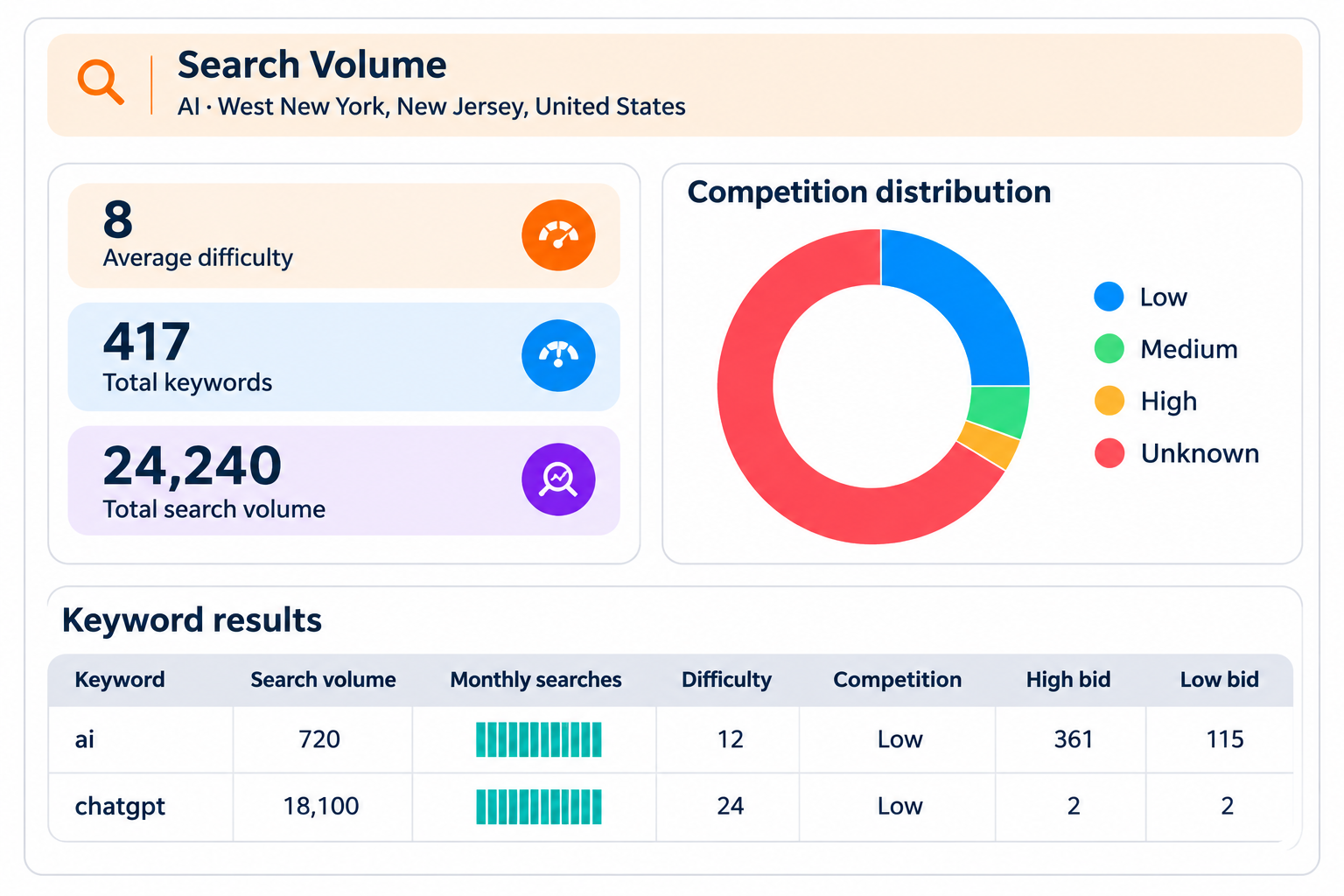
Compare search demand and trends
Review available average monthly search-volume figures and historical monthly values to understand whether interest appears steady, seasonal, or changing. Where competition or cost-per-click metrics are available, use them as additional context rather than a prediction of SEO difficulty or paid-search results.
How to use search-volume data:
Choose target keywords
Choose a keyword or build a list from Keyword Suggestion.
Set the target location
Set the target market or campaign location where supported.
Analyze keyword metrics
Review the available volume, trend, and competition metrics.
Compare relevance and rankings
Compare those signals with keyword relevance and current rankings.
Prioritize valuable keywords
Prioritize a balanced set of terms instead of selecting keywords by volume alone.
Search volume is one signal—not a strategy by itself
A high-volume term may be broad or highly competitive. A more specific phrase may better match what your customers need. Consider search intent, your website’s expertise, existing landing pages, and the resources available to create useful content.
Frequently asked questions
What does keyword search volume mean?
Search volume is an estimate of the number of searches for a keyword in a defined market and period. It is an estimate, not a forecast of the visits your website will receive
Why can search-volume estimates differ between tools?
Providers may use different datasets, market definitions, update schedules, and estimation methods. ESO’s displayed figures may therefore differ from another platform.
Does search volume change by location?
Yes. The same phrase can have different estimated demand in different countries or other supported target locations.
Does high search volume mean a keyword is easy to rank for?
No. Search demand and ranking competition are different signals. Review competition, intent, the search results, and your own ranking data before prioritizing a keyword.