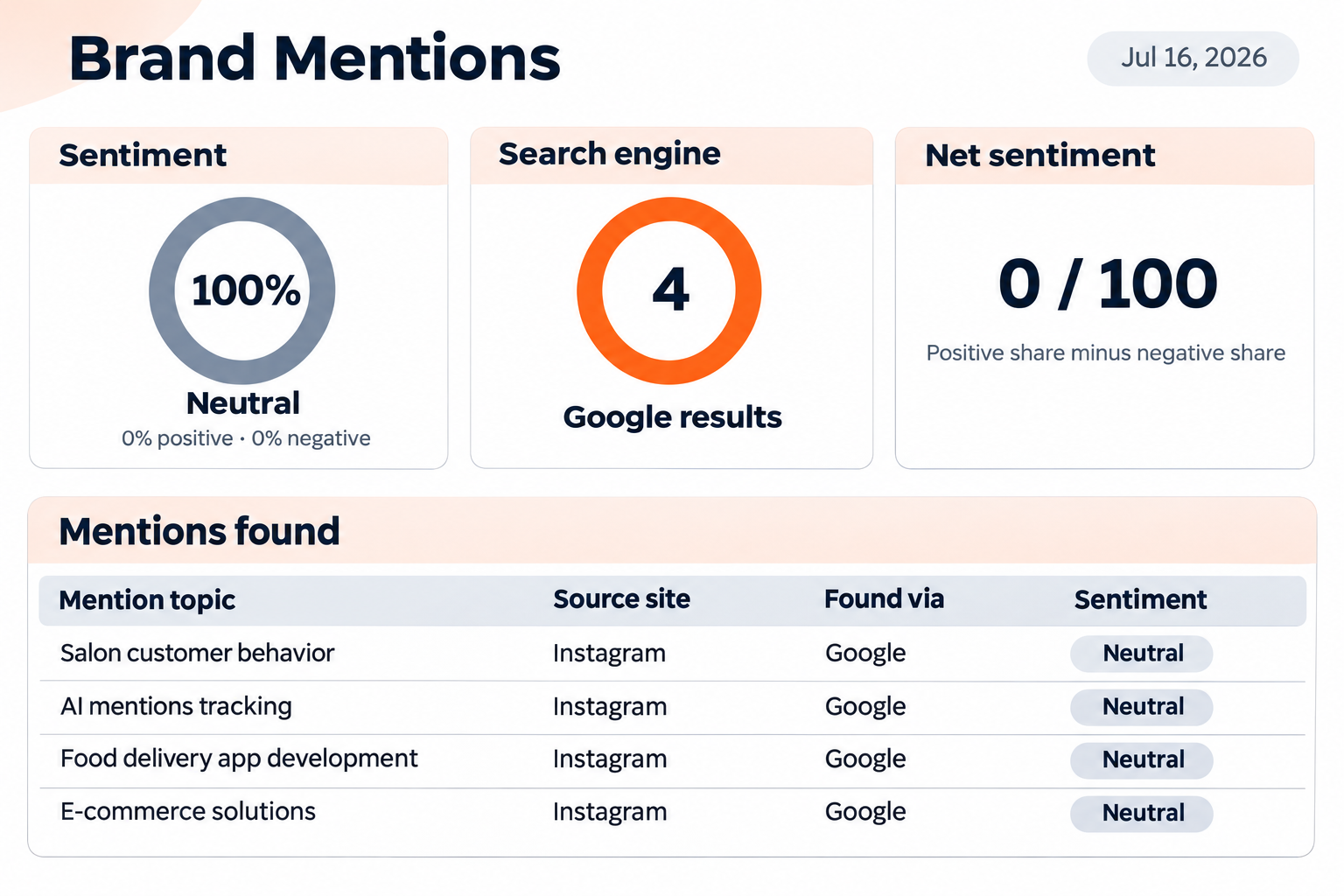
Turn search results into a clearer picture
1
Choose your search terms
Enter your brand name and additional terms related to a product, service, or topic.
2
Review discovered results
Browse the available titles, descriptions, URLs, and source labels.
3
Filter by sentiment
Focus on results labeled positive, neutral, or negative.
4
Check the context
Visit the original page before responding or drawing conclusions.
5
Track what to investigate
Use the report as a starting point for reputation, content, and communications follow-up.
Read sentiment as a signal, not a verdict
Sentiment labels are automated estimates based on available result text. Short snippets, mixed opinions, sarcasm, or missing context can make a label inaccurate. Treat sentiment as a way to prioritize review—not as a definitive assessment of a publisher, customer, or the overall public mood.
Brand Mentions is based on the search results available to ESO for the terms submitted. It is not a real-time feed of every website, social platform, private group, or conversation.
Frequently asked questions
How do I search for mentions?
Provide your brand name and additional terms to run a mention search. Use terms that make the results relevant to the product, service, or topic you want to monitor.
What sources are included?
ESO gathers results from supported search sources, which currently include Google, Bing, and DuckDuckGo result data. Coverage can vary by query and availability; this is not exhaustive web-wide monitoring.
How accurate is the sentiment label?
Sentiment is estimated automatically from available page text or search-result descriptions. Always review the original source for context before acting.
Does this monitor social media?
This report searches supported web-search results. It should not be described as comprehensive social listening. For connected social-account performance, see Social Media Insights.
How often are mentions updated?
New data is collected when a report is run. Confirm the current report schedule, processing time, and plan limits in the product before promising a refresh frequency.