
K

AI Keyword Clustering

Group related keywords and see how they fit your website
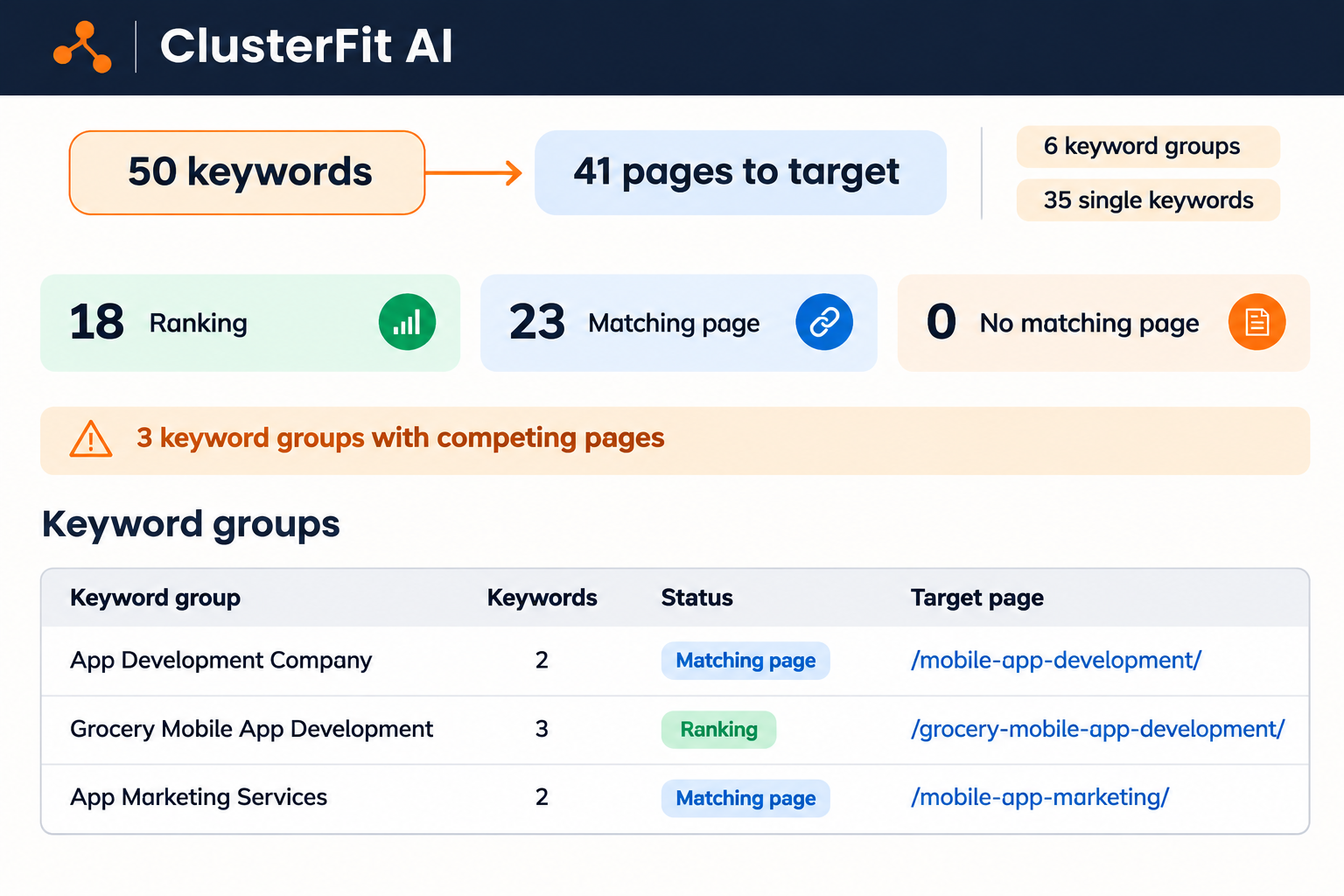
AI Keyword Clustering organizes related campaign keywords into topic groups and compares those groups with the pages on your website. It can help you understand which pages appear to serve a topic, where a page may be a weak match, where no suitable page was found, and where multiple pages may compete for similar terms.
Use these insights to plan content and review page ownership. Clustering is an analytical aid; it does not determine the only correct site architecture or guarantee ranking improvements.
ClusterFit AI keyword group report

From campaign keywords to topic groups

ESO evaluates campaign keywords using available ranking/search-result information and semantic similarity signals. It then groups related terms, evaluates their relationship to crawled site pages, and presents an owner-page or potential content-gap assessment.

Depending on the available data, a cluster may be marked as:

– Owned: A page on your site is already ranking for the group.
– Weak owner: A likely page is identified, but its ranking or semantic fit may need review.
– Content gap: No suitable ranking or semantically matching page was identified in the analyzed site data.
– Possible cannibalization: Multiple pages may be ranking for overlapping terms in the group.

These are analytical classifications based on available reports and thresholds, not definitive judgments. Review the cited URLs, query intent, and content before making changes.

Connect clusters to an action:

For clusters that need attention, ESO can provide next-step workflows such as:

– Review pages that may compete for similar keywords
– Explore an identified page with the AI Content Optimizer
– Research a topic group with Topic Research

Availability of these actions depends on the relevant account features, campaign, and completed report data.

A useful workflow for content planning

Create a keyword campaign

Create a keyword campaign and add relevant target keywords.

Run the ranking report

Run the required ranking report and ensure eligible website crawl data is available.

Review topic groups

Review the topic groups and their keyword, volume, and ranking metrics.

Check page matches

Check the suggested owner page and any semantic page match.

Investigate content gaps

Investigate possible gaps or overlapping pages before editing or publishing.

Monitor the results

Use the available content or topic research workflow, then monitor the results.

Cluster fit is a starting point for human review

Search intent can be ambiguous, and website crawls or ranking data may be incomplete. A semantically similar page is not always the right page for a keyword. Review page purpose, audience, conversion goal, and search results before combining pages or creating new content.

Frequently asked questions

What is AI keyword clustering?

It groups related keywords into topic clusters and helps map those clusters to pages on your website using ranking, search-result, and semantic signals available to ESO.

What does “weak owner” mean?

ESO has identified a possible page for a keyword group, but the page may not be ranking strongly or may need a closer relevance review. Check the page and its search intent before deciding what to change.

What is possible keyword cannibalization?

It is a signal that multiple pages may rank for overlapping keywords in a cluster. This is a prompt to review page roles and intent, not proof that the pages are harming one another.

Does a content gap mean I should create a new page?

Not automatically. First check whether an existing page can serve the topic, whether the topic is relevant to your audience, and whether the search intent supports a separate page.

Do I need AI Content Optimizer to use clustering?

Clustering availability is subscription-dependent. The project configuration ties report generation to an AI Content Optimizer add-on; confirm current plan names and eligibility in the live product before publishing plan details.