
Introduction:
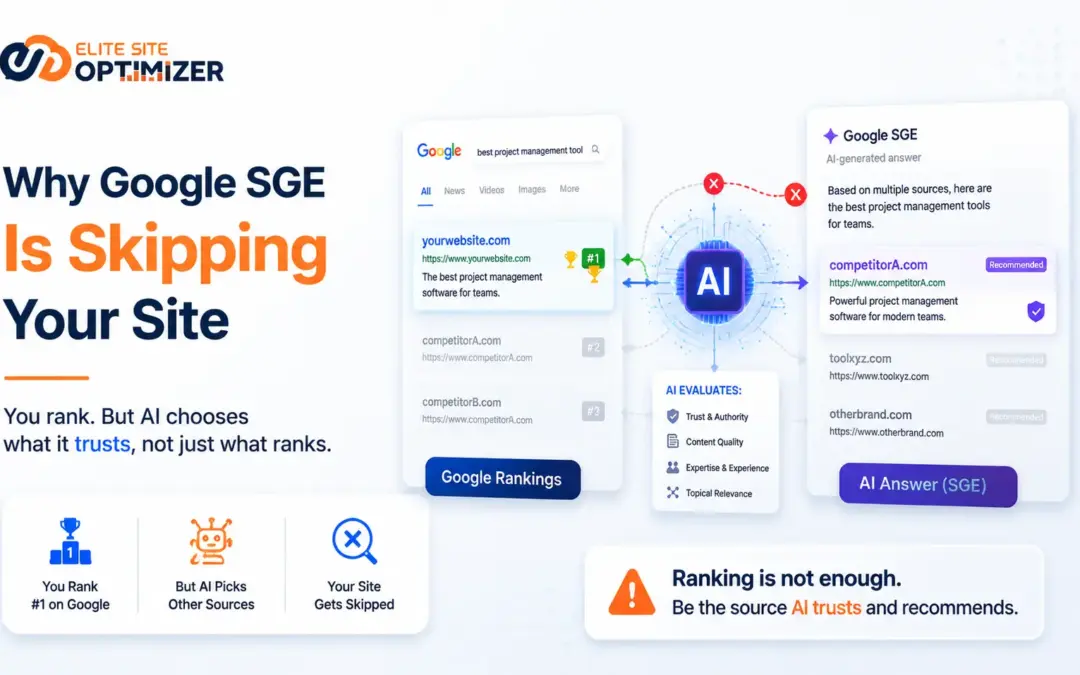
The digital search landscape is transforming, and the way users find answers online is no longer limited to traditional search results. In 2026, users increasingly rely on concise, curated responses from intelligent systems that prioritize clarity, trust, and relevance. For businesses, this means that even high-ranking websites can be overlooked if content isn’t structured, authoritative, and easy to interpret. Ensuring your website communicates effectively, provides comprehensive answers, and maintains consistent brand information is now critical to staying visible and competitive in the evolving search ecosystem. Businesses that fail to understand why Google AI Overview platforms skip their content may be missing high-value opportunities for visibility and engagement.
This guide explains why your website may not appear in Google AI Overviews, explores the most common reasons, and outlines practical steps to improve your chances of being included to ensure your content is cited across multiple AI platforms. By the end, you’ll understand not only why your website is being skipped but also how to align it with the expectations of modern AI-driven search.
What Are Google AI Overviews?
Google AI Overviews (previously known as Search Generative Experience or SGE) represent a new way Google delivers search results. Instead of listing ranked pages in the traditional manner, Google synthesizes information from multiple sources to provide direct answers.
Key features of Google AI Overviews:
- They summarize information into concise, actionable answers.
- Only a limited number of sources are referenced in each overview.
- Being cited increases visibility, credibility, and authority on AI platforms.
Traditional SEO ensures your pages are discoverable by Google, but AI citations are required for inclusion in AI-generated summaries. This distinction is critical because being referenced in ChatGPT, Gemini, Perplexity, or Claude can significantly influence your audience reach and brand recognition.
How AI Chooses Sources
Understanding why AI systems skip certain websites starts with knowing how they select sources. LLMs evaluate multiple signals, including:
- Clarity: Can the AI quickly understand your content?
- Authority: Does your site demonstrate expertise, supported by credible references?
- Content Structure: Well-organized pages with headings, bullet points, and schema are easier for LLMs to parse.
- Relevance: Does your content fully answer user questions?
- Consistency: Is brand information uniform across platforms, including social media and directories?
When content aligns with these signals, it has a better chance of being selected for AI-generated search summaries. Conversely, pages lacking these signals are often ignored, even if they rank well in traditional SEO.
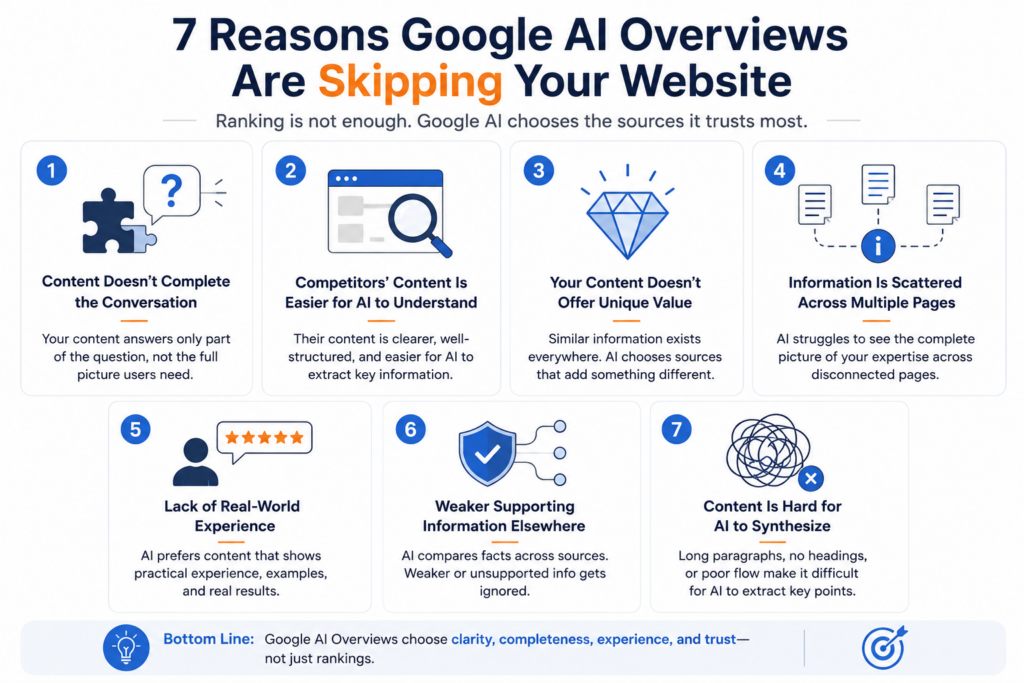
Seven Reasons Google AI Skips Your Website
1. Answers Are Partial
AI systems favor content that fully addresses user intent, including follow-up questions. Superficial pages are less likely to be included in AI-generated responses.
2. Competitor Pages Are Easier for AI
Competitor websites with clear headings, bullet points, tables, and structured lists are parsed more efficiently, improving their likelihood of citation.
3. No Unique Value
Content that repeats widely available information rarely gets referenced by LLMs. Adding original insights, case studies, or examples increases citation probability.
4. Fragmented Information
If content is scattered across multiple pages, AI struggles to extract a complete narrative. Cohesive, topic-focused pages improve AI overview Ranking.
5. Lack of Practical Examples
AI favors content demonstrating applied knowledge. Pages with examples, workflows, or lessons learned are more likely to be referenced.
6. Weak Supporting Sources
LLMs give preference to pages corroborated by credible references, internal linking, and consistent data.
7. Hard-to-Parse Content
Content with long paragraphs, poor headings, or missing summaries reduces AI comprehension. Well-structured pages make it easier for LLMs to generate accurate summaries.
How to Check Your Visibility
Before optimizing, businesses should check website visibility across AI platforms:
- Run queries on ChatGPT, Gemini, Perplexity, and Claude.
- Observe which competitors are cited.
- Identify gaps in coverage or clarity.
- Track mentions over time to measure AI citations progress.
Diagnostic checks help prioritize updates efficiently and identify content most likely to impact your AI overview Ranking.
How to Improve AI Visibility
Enhancing AI visibility requires strategic steps:
- Structured content: Organize pages with headings, bullet points, and schema markup.
- Authority signals: Use credible references and consistent branding.
- Comprehensive content: Provide complete answers, examples, and relevant context.
- Citation tracking: Use the ESO AI Citations Checker to monitor mentions across AI platforms.
- Consistency: Maintain uniform information across all web channels to strengthen entity recognition.
By applying these strategies, your content becomes easier for AI systems to understand, trust, and refer.
 \
\
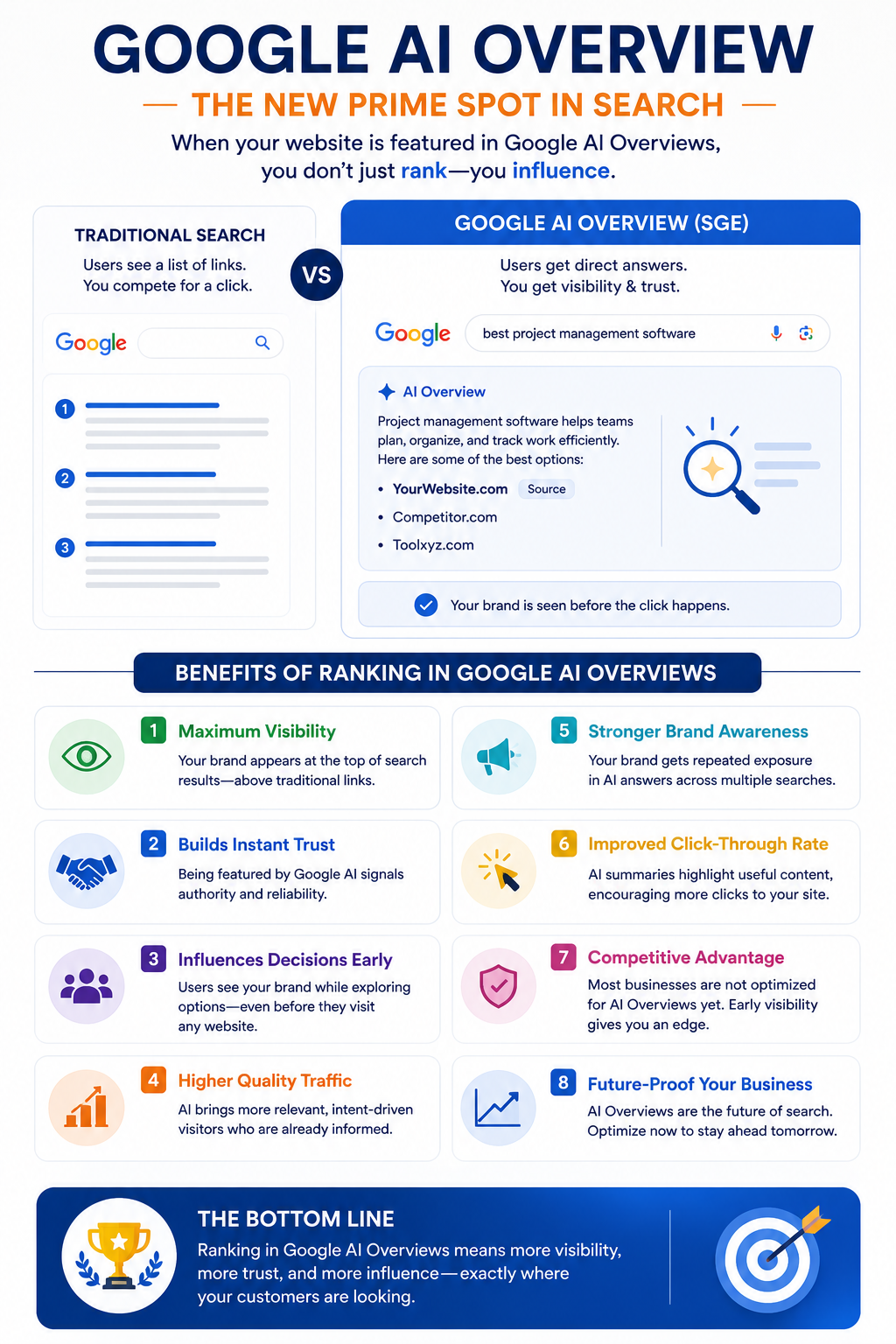
Benefits of AI Citations
Proper AI citations offer tangible advantages:
- Enhanced discoverability on AI platforms.
- Strengthened credibility and trust.
- Increased engagement with high-intent traffic.
- Competitive advantage over uncited competitors.
- Long-term inclusion in AI-driven content summaries.
Conclusion
A strong Google ranking does not automatically guarantee inclusion in AI-generated answers. Google AI evaluates whether your content provides the clarity, depth, and reliability needed to support a user’s question.
Elite Site Optimizer (ESO) helps businesses identify content gaps that may prevent their website from being selected in AI search experiences. Through AI readiness analysis and optimization insights, organizations can understand why competitors may be appearing ahead of them and take informed steps to improve their chances of being recognized as a trusted source.
The goal is not just to rank higher; it is to become the source AI chooses when generating answers.
Free Trial Awaits
Ready to improve your website’s search performance?
Sign up for Elite Site Optimizer and start analyzing your website’s SEO, accessibility, performance and content quality.
Start Your Free Signup