

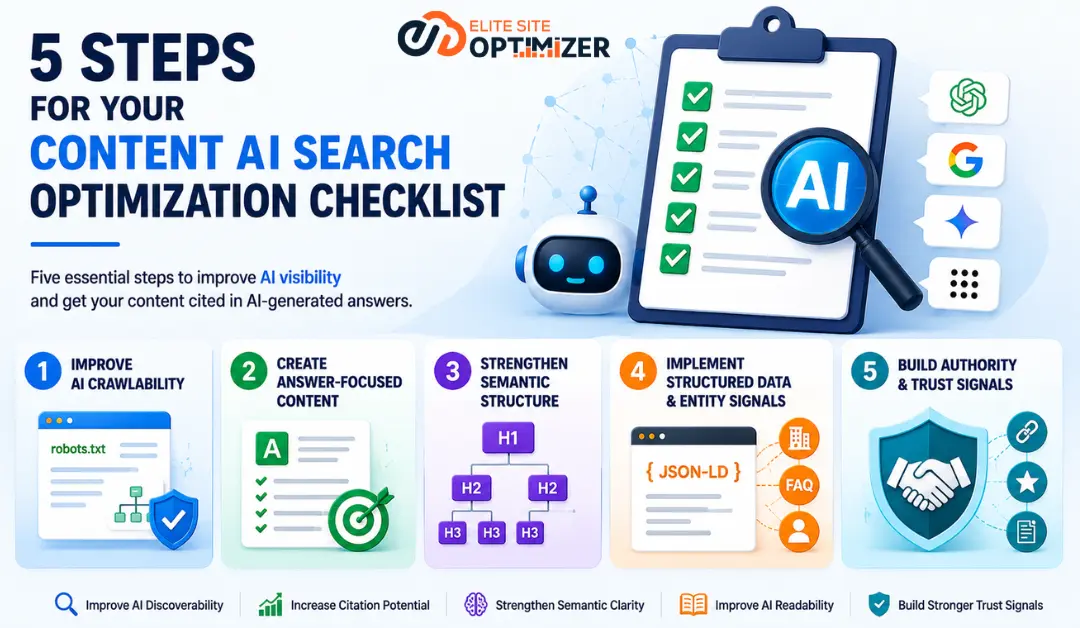
Ranking in search results is no longer enough. Today, your content must be structured so AI systems can discover it, understand it, and confidently reference it in generated responses. Platforms such as ChatGPT, Google AI Overviews, Gemini, and Perplexity prioritize content that is technically accessible, semantically structured, and supported by trustworthy signals.
That is why businesses need a practical AI content optimization checklist. Elite Site Optimizer helps businesses identify the structural, semantic, and AI visibility gaps that prevent content from being properly understood and cited across AI-powered search experiences.
This guide outlines five essential steps to improve AI visibility and strengthen your chances of appearing in AI-generated answers and citations.
Why AI Search Optimization Matters
AI-powered search is changing how users discover information online. Instead of browsing multiple search results, users increasingly rely on AI-generated summaries and recommendations.
Content that is not structured for AI interpretation may struggle to appear in AI-generated responses.
Effective AI search optimization helps your content:
- Improve AI discoverability
- Increase citation potential
- Strengthen semantic clarity
- Improve AI readability
- Build stronger trust signals
Visibility now depends on more than traditional rankings. The goal is to create content AI systems can confidently interpret and reference.
Step 1: Improve AI Crawlability
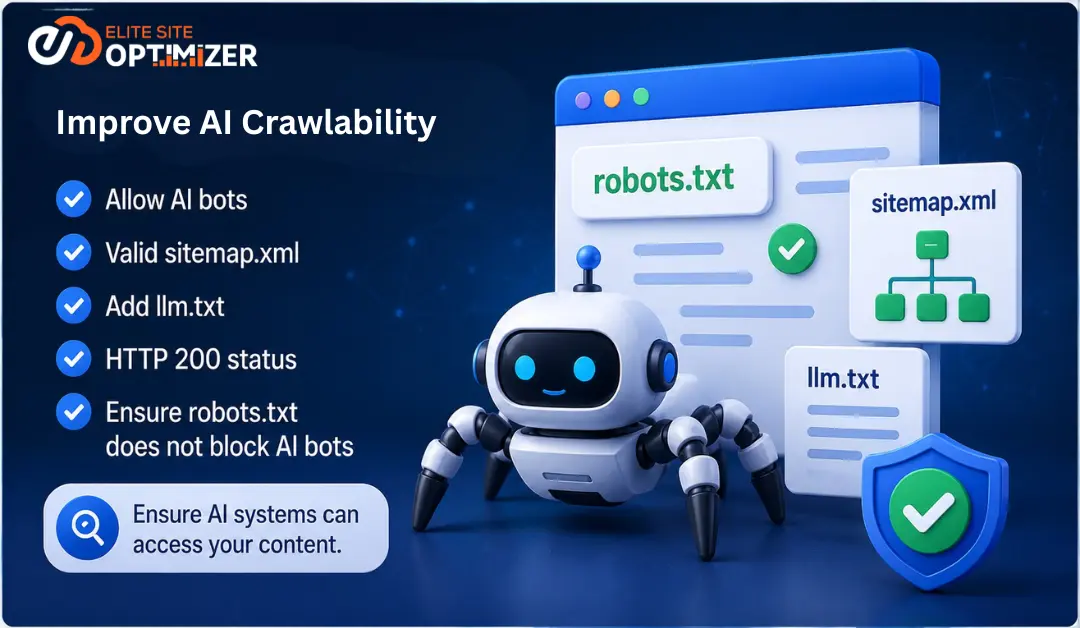
If AI systems cannot access your content, they cannot use it. Crawlability is the foundation of AI visibility.
Checklist
- Ensure robots.txt does not block AI bots.
- Allow crawlers such as GPTBot and Claude
- Maintain a valid sitemap.xml
- Add llm.txt for AI-specific crawl guidance.
- Ensure pages return a valid HTTP 200 response.
Elite Site Optimizer’s AI Readiness Audit evaluates crawlability, sitemap accessibility, AI bot permissions, and crawl directives that impact discoverability.
Explore the AI Readiness Audit from Elite Site Optimizer to identify crawlability issues affecting AI visibility.
Step 2: Create Answer-Focused Content
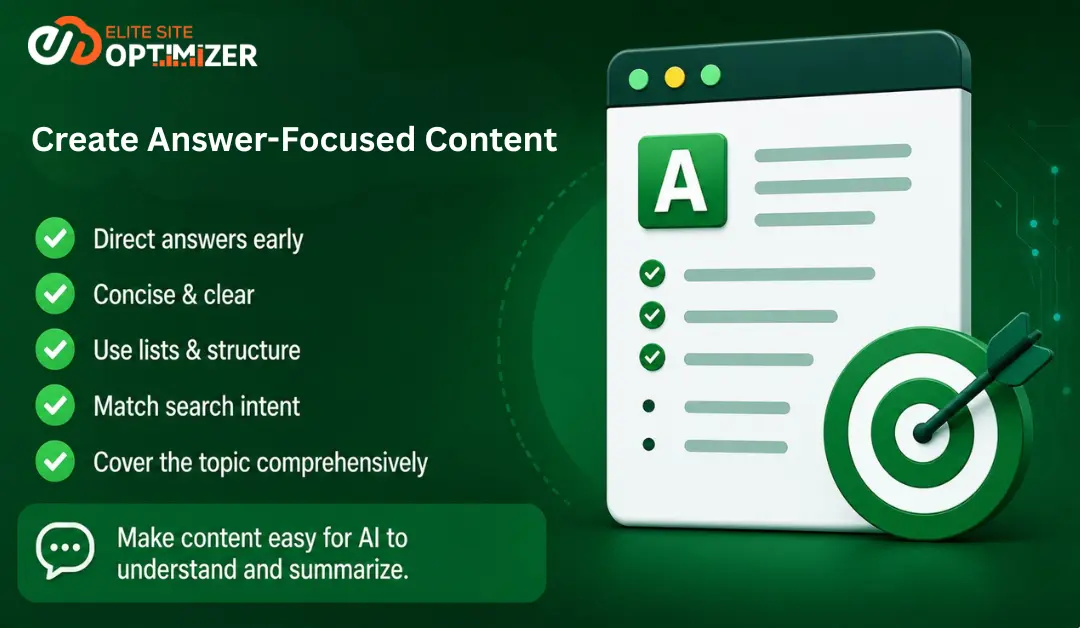
AI systems prioritize content that provides clear and direct answers early in the page.
Content overloaded with filler, vague explanations, or poor formatting becomes harder for AI systems to summarize accurately.
Checklist
- Place direct answers near the beginning
- Use concise paragraphs
- Include lists and structured formatting
- Align content with search intent
- Cover the topic comprehensively
Elite Site Optimizer evaluates answer completeness, paragraph structure, content chunking, and AI readability to improve content extractability.
The easier your content is to interpret and summarize, the stronger its AI citation optimization potential becomes.
Step 3: Strengthen Semantic Structure
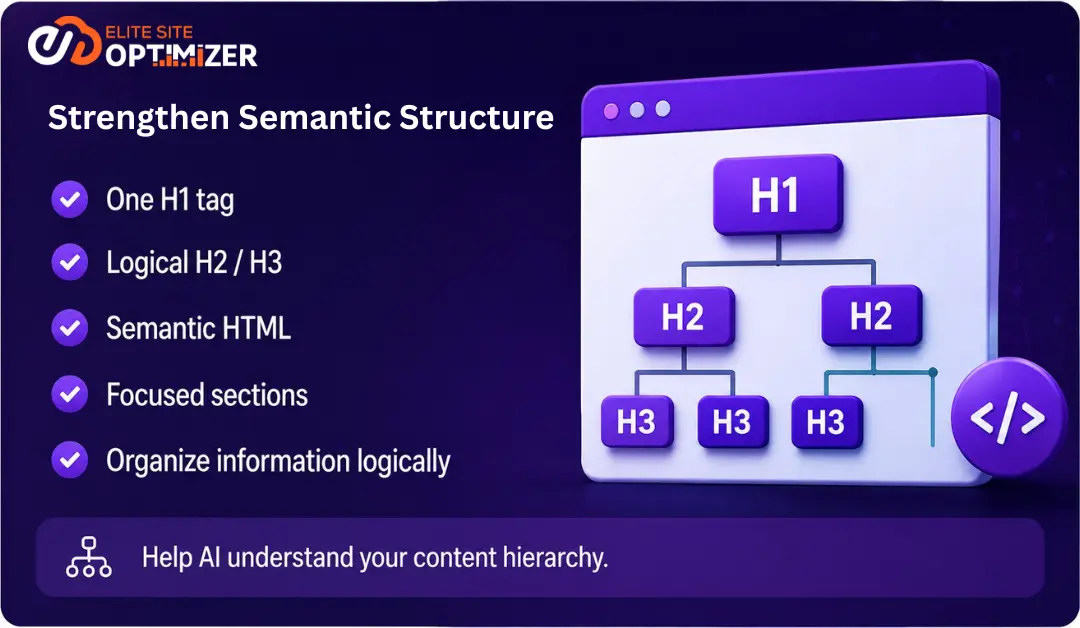
AI systems rely on semantic structure to understand relationships between topics and content hierarchy. Weak organization reduces contextual clarity and AI readability.
Checklist
- Use one H1 tag
- Follow a logical H2 and H3 hierarchy
- Use semantic HTML elements
- Keep sections focused on a single topic.
- Organize information logically
Elite Site Optimizer evaluates heading hierarchy, semantic HTML structure, and section organization to identify structural issues affecting AI comprehension.
Strong semantic organization helps AI systems process and interpret content more effectively.
Step 4: Implement Structured Data and Entity Signals
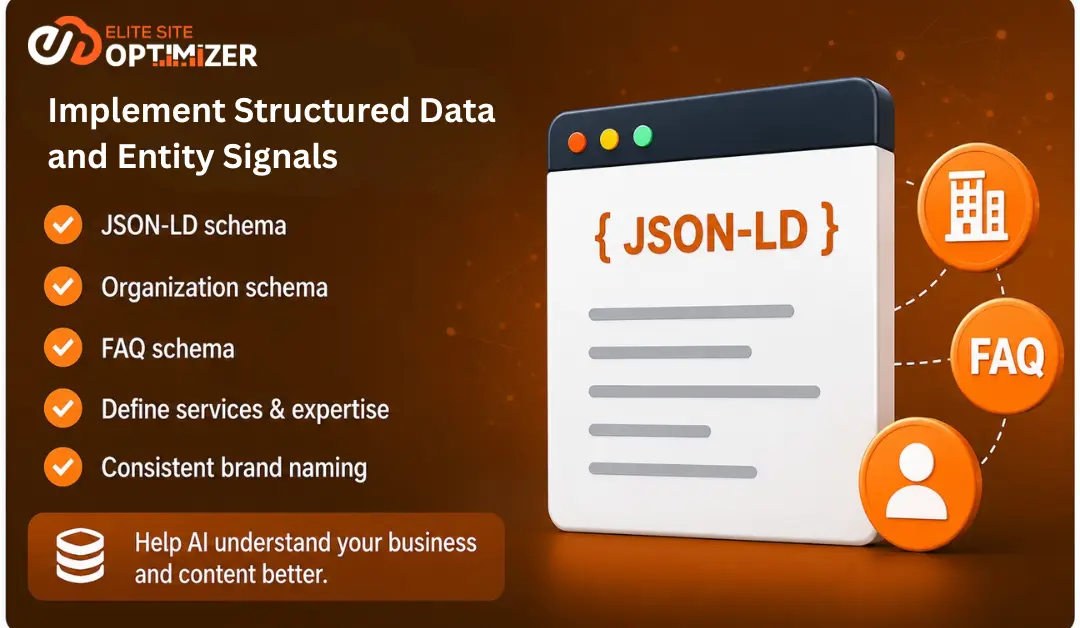
Structured data helps AI systems understand your business, services, and content relationships more accurately.
Without strong entity clarity, AI systems may struggle to associate your content with relevant search intent.
Checklist
- Implement valid JSON-LD schema
- Add organization schema
- Use FAQ schema where appropriate
- Define services and expertise clearly
- Maintain consistent brand naming
Elite Site Optimizer validates structured data implementation and identifies missing schema elements that weaken AI discoverability.
AI Readiness Audit Checks
The audit evaluates:
- Schema markup presence
- JSON-LD implementation
- Organization schema
- FAQ schema
- Entity clarity and contextual structure
Strong structured data improves contextual understanding, discoverability, and AI citation optimization.
Step 5: Build Authority and Trust Signals
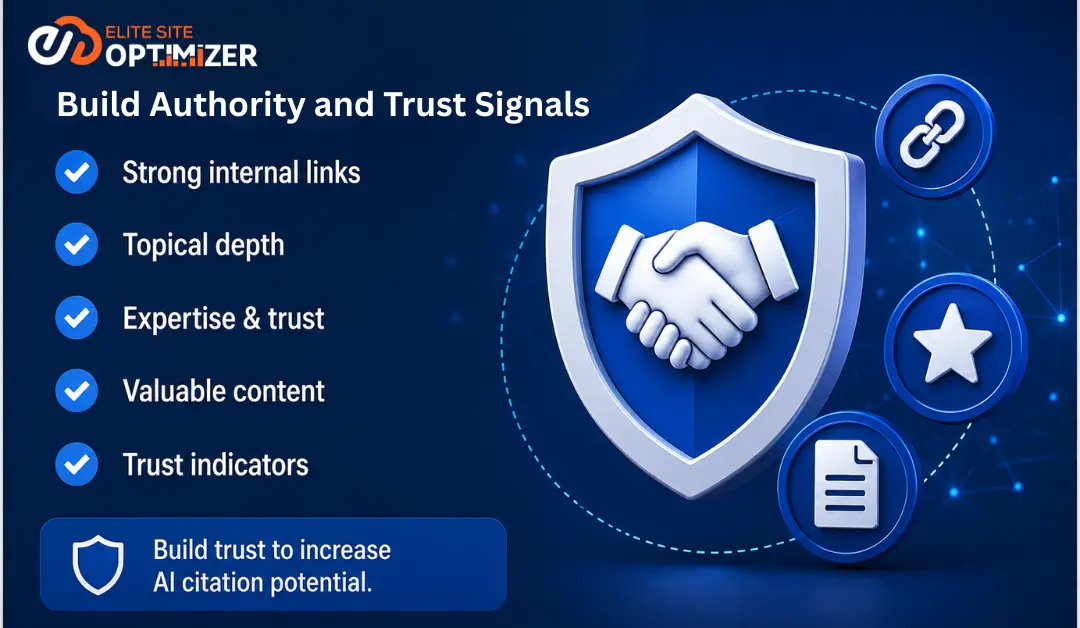
AI systems prioritize content that appears credible, trustworthy, and well-supported. Weak authority signals reduce the likelihood that AI-generated responses will reference your content.
Checklist
- Strengthen internal linking
- Maintain topical depth
- Highlight expertise clearly
- Include trust indicators and business information
- Publish valuable, experience-driven content
Elite Site Optimizer evaluates authority signals such as the following:
- Internal linking structure
- External references
- E-E-A-T indicators
- Contextual authority signals
Strong authority improves trust and increases citation readiness across AI-powered search experiences.
Common Mistakes That Reduce AI Visibility
Many websites publish quality content but still fail to appear in AI-generated answers because critical optimization signals are missing.
Common issues include:
- Blocking AI crawlers
- Weak semantic structure
- Missing structured data
- Thin or repetitive content
- Heavy JavaScript dependency
- Limited authority signals
Many of these problems connect to broader AI discoverability issues that prevent AI systems from properly understanding and referencing websites.
The AI Readiness Audit helps identify these hidden visibility barriers and prioritize the most impactful improvements.
Why Elite Site Optimizer Over Others?
Most SEO platforms focus heavily on rankings, traffic estimates, and keyword tracking. While those metrics remain useful, they provide limited insight into how AI systems interpret and evaluate content.
Elite Site Optimizer is built specifically to improve AI discoverability, AI citation optimization, and long-term visibility in AI-powered search experiences.
The platform helps businesses:
- Identify hidden AI visibility gaps
- Improve AI readability and semantic clarity
- Strengthen crawlability and rendering accessibility
- Improve structured data implementation
- Build stronger authority signals
- Increase citation readiness
Elite Site Optimizer transforms AI optimization into measurable AI visibility intelligence.
FAQ: AI Search Optimization
What is AI search optimization?
AI search optimization is the process of improving content structure, clarity, authority, and accessibility so AI systems can interpret and reference it more effectively.
How do I optimize content for AI search engines?
You can optimize content for AI search engines by improving semantic structure, implementing structured data, strengthening authority signals, and improving AI readability.
What is AI citation optimization?
AI citation optimization increases the likelihood that AI-generated responses will reference or cite your content.
Why is AI visibility important?
AI visibility helps businesses appear in AI-generated answers, summaries, and recommendations across AI-powered search experiences.
The Future of AI Content Visibility
AI-powered search experiences are reshaping how users discover information online. Businesses that continue relying only on traditional SEO strategies risk losing visibility as AI-generated discovery becomes more dominant.
The challenge is no longer just ranking content. The real challenge is creating content AI systems can clearly interpret, trust, summarize, and reference confidently.
Businesses that improve AI search optimization today will build a stronger foundation for long-term discoverability and citation visibility.
Elite Site Optimizer helps businesses identify the structural, semantic, and authority gaps that reduce AI visibility and citation readiness across AI-powered search experiences.
Explore the AI Readiness Audit from Elite Site Optimizer to uncover the improvements needed to strengthen AI discoverability and long-term content visibility.
Ready to improve your website’s search performance?
Sign up for Elite Site Optimizer and start analyzing your website’s SEO, accessibility, performance and content quality.
Start Your Free Signup