
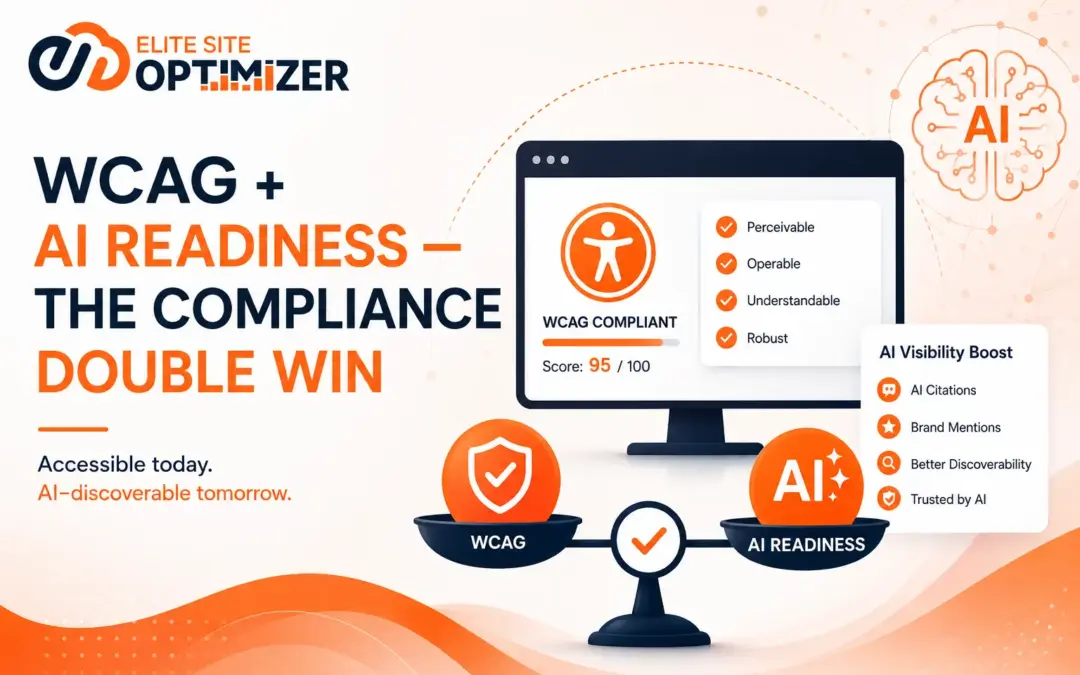
WCAG + AI Readiness — The Compliance Double Win
SEO is evolving into a hyper-intelligent ecosystem where accessibility and AI readiness converge. Websites that combine accessible design with clear, machine-readable content can create a stronger foundation for users, search engines, and AI-powered discovery.
In this blog, we’ll explore how WCAG compliance and AI readiness complement each other, walk through a realistic step-by-step process using ESO, and highlight actionable ways to enhance AI visibility. By the end, you’ll understand how to achieve the compliance double win, improve user experience, and future-proof your website for both human users and AI systems.
Why Accessibility and AI Readiness Matter Together
WCAG compliance ensures that all users, including those with disabilities, can interact efficiently with your website. From visual impairments to cognitive differences, WCAG provides testable guidelines that help make content perceivable, operable, understandable, and robust for people with disabilities.
AI readiness focuses on making content understandable and technically available to AI-powered search and answer systems. Clear, structured content improves machine readability and enhances discoverability across AI platforms.
Understanding WCAG Compliance
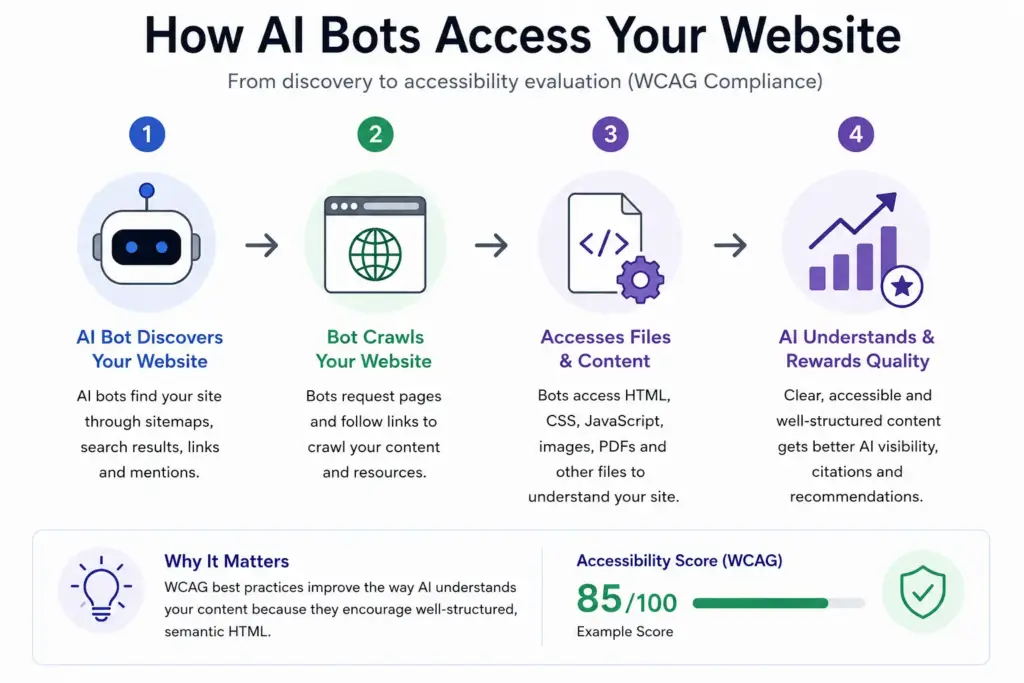
WCAG compliance provides a framework for creating accessible content that works for everyone. Key areas include:
Core Accessibility Elements
- Headings and Structure: Properly nested H1–H6 headings improve navigation for assistive technologies and provide a logical content hierarchy.
- Alternative Text for Images: Describes images for screen readers and supports machine-readable context where appropriate.
- Color Contrast: Ensures readability for users with low vision or difficult viewing conditions.
- Form Labels and Inputs: Explicit labels help assistive technologies associate instructions with controls and improve usability.
Businesses can utilize WCAG test tools to evaluate these elements and generate WCAG accessibility testing reports, tracking progress and prioritizing fixes as content evolves.
Benefits for SEO and AI:
While accessibility primarily benefits humans, some practices—like semantic headings, labels, transcripts, and structured documents—also support clearer machine interpretation. This may improve the potential for AI discoverability, but compliance alone does not guarantee AI citations or rankings.
Understanding AI Readiness
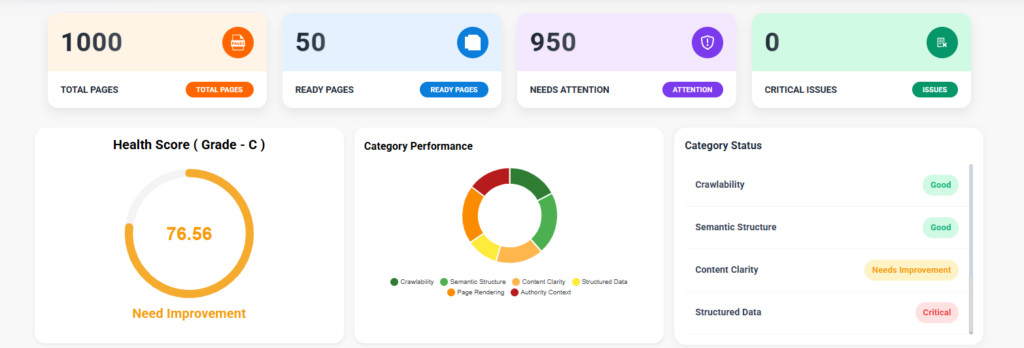
AI readiness ensures public content is accessible, understandable, current, and technically available to AI-powered search and answer systems.
Key Components of AI Readiness
- Structured Content: Clear headings, bullet points, and semantic HTML.
- Metadata Optimization: Valid schema markup, FAQs, and HowTo structured data.
- File Accessibility: PDFs, Word documents, and multimedia that are properly tagged and searchable.
- Content Signals: Entity information, authority, freshness, and technical indexability.
Businesses can use search terms like LLM Checker, AEO audit, and GEO Audit to evaluate AI readiness. ESO complements these by providing actionable insights, detailed accessibility reports, and a structured roadmap to enhance AI visibility and discoverability.
For further guidance, see our AI Citations Checklist for 2026 to maximize recognition.
How WCAG Compliance Supports AI Readiness
Accessible websites improve machine interpretability in several ways:
Synergistic Practices
- Clear headings and content hierarchy help AI understand page structure.
- Alternative text and media descriptions provide semantic clues.
- Well-organized tables and forms allow machines to extract information efficiently.
Note: These practices support AI readiness, but they do not guarantee citations, ranking, or AI recommendation.
Step-by-Step Compliance Double Win Process
Step 1 — Review Accessibility Score
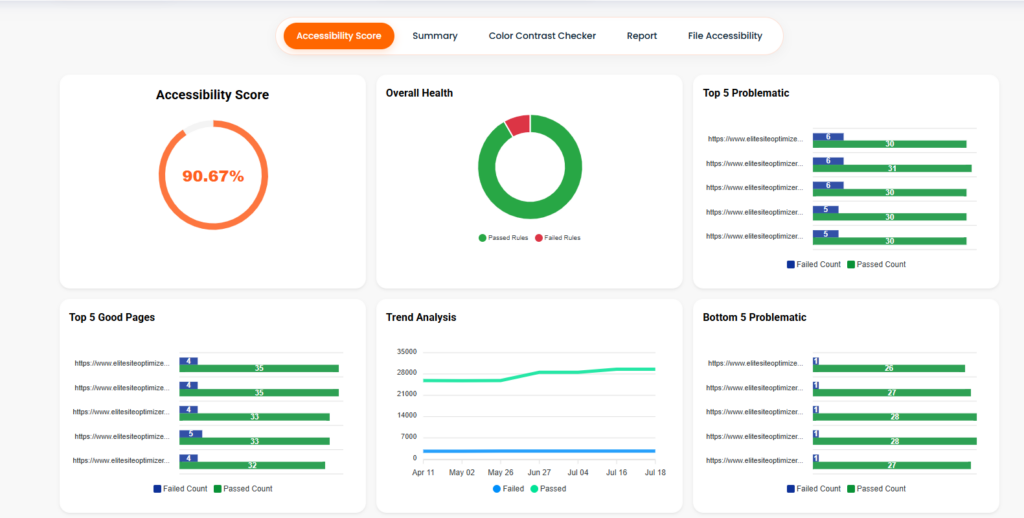
- Check the Accessibility Score in ESO to identify pages needing attention. Evaluate results from WCAG testing to prioritize fixes.
Step 2 — Analyze Overall Health Metrics
- Use the Summary tab to track passed vs failed rules. Focus on high-severity issues first to enhance usability and machine readability.
Step 3 — Check Color Contrast
- Use the Color Contrast Checker to ensure readability for users. Adjust foreground and background colors to meet WCAG standards for human users.
Step 4 — Generate Detailed Reports
- Download ESO accessibility reports for actionable insights. Reports help teams resolve barriers and improve structured machine-readable context.
Step 5 — Verify File Accessibility
- Use the File Accessibility tab to ensure PDFs, Word documents, and images are accessible, properly tagged, and searchable.
Step 6 — Track Progress with Trends
- Monitor improvements over time. Track accessibility scores separately from AI-readiness and citation metrics to understand broader impact.
Step 7 — Implement Fixes and Recheck
- Apply corrections, re-run audits, and confirm barriers are resolved. Run additional AEO, GEO, crawler-access, and citation checks to evaluate AI readiness.
Benefits of Combining WCAG + AI Readiness
- Legal and ethical compliance: Reduces risk and ensures inclusivity.
- Enhanced AI visibility: Structured, accessible content is easier for AI to parse.
- Improved engagement: Better usability leads to longer session times and lower bounce rates.
- Higher AI search ranking: Pages that are AI-ready are more likely to be cited in generative AI summaries.
- Trust and credibility: Inclusive and AI-compliant websites project authority.
ESO Features That Make the Double Win Easy
Accessibility Score
- Monitors overall WCAG compliance across all pages.
File Accessibility Coverage
- Ensures PDFs, Word docs, and images are accessible and machine-readable.
Accessibility Reports
- Provides actionable insights to resolve barriers and improve machine-readable context.
- ESO helps businesses systematically improve accessibility and AI readiness simultaneously.
By leveraging these ESO features, businesses can systematically improve accessibility and AI readiness simultaneously, achieving a measurable “double win.”
“Want to see if your website is truly AI-ready? Check out our step-by-step guide on Auditing Your Site for AI Readiness in 30 Minutes and ensure your content is optimized for AI visibility.”
Conclusion
Combining WCAG compliance and AI readiness ensures your website is accessible to all users and optimized for AI discoverability.
With Elite Site Optimizer (ESO), organizations can:
- Track accessibility scores
- Monitor file accessibility coverage
- Generate detailed accessibility reports
- Evaluate AI readiness through separate checks
This approach delivers a true compliance double win: inclusive, authoritative, and AI-ready content. Future-proof your website for accessibility and AI recognition.
For further reading and to strengthen your AI strategy, explore:
- Rank Website on Google AI Overview
- AI Citation Checklist for 2026
- Improve Your Website AI Visibility
- Audit Your Site for AI Readiness in 30 Minutes
Ready to improve your website’s search performance?
Sign up for Elite Site Optimizer and start analyzing your website’s SEO, accessibility, performance and content quality.
Start Your Free Signup