
Introduction
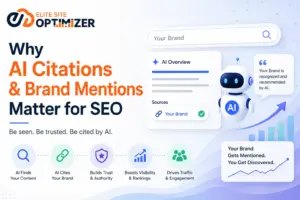
In 2026, ranking on Google alone is no longer the only measure of digital success. With the rise of LLMs and AI-powered search platforms, businesses need to focus on AI citations to enhance online visibility. Being cited in AI-generated responses, such as ChatGPT, Gemini, Perplexity, and Claude, is now a key factor for credibility, discoverability, and engagement.
Even if your website ranks at the top of Google, it may not appear in AI-generated summaries if it lacks proper citations or structured information. Understanding how to make your website easier for AI systems to reference can significantly impact your digital presence.
This checklist explains how to improve your chances of being cited by leading AI platforms, enhance your ai search ranking, and leverage AI citation tools and best practices for maximum recognition.
Why AI Citations Matter in 2026
Traditional SEO focuses on keywords, backlinks, and domain authority. However, AI platforms and LLMs operate differently. They prioritize sources that demonstrate authority, clarity, and consistent referencing. That’s why AI citations are now critical.
When content is properly referenced, AI systems can recognize your expertise and include your website in AI-generated answers. This not only drives traffic but also positions your brand as a trusted source of information.
Key benefits of proper AI citations include:
- Enhanced discoverability on AI platforms.
- Credibility and trust among users and AI assistants.
- Higher engagement from high-intent traffic.
- Competitive advantage over websites not cited.
- Long-term visibility and integration with LLMs.
Understanding the difference between traditional SEO rankings and AI citations is essential for any organization seeking to thrive in the age of AI-driven search.
How LLMs and Leading AI Platforms Select Sources
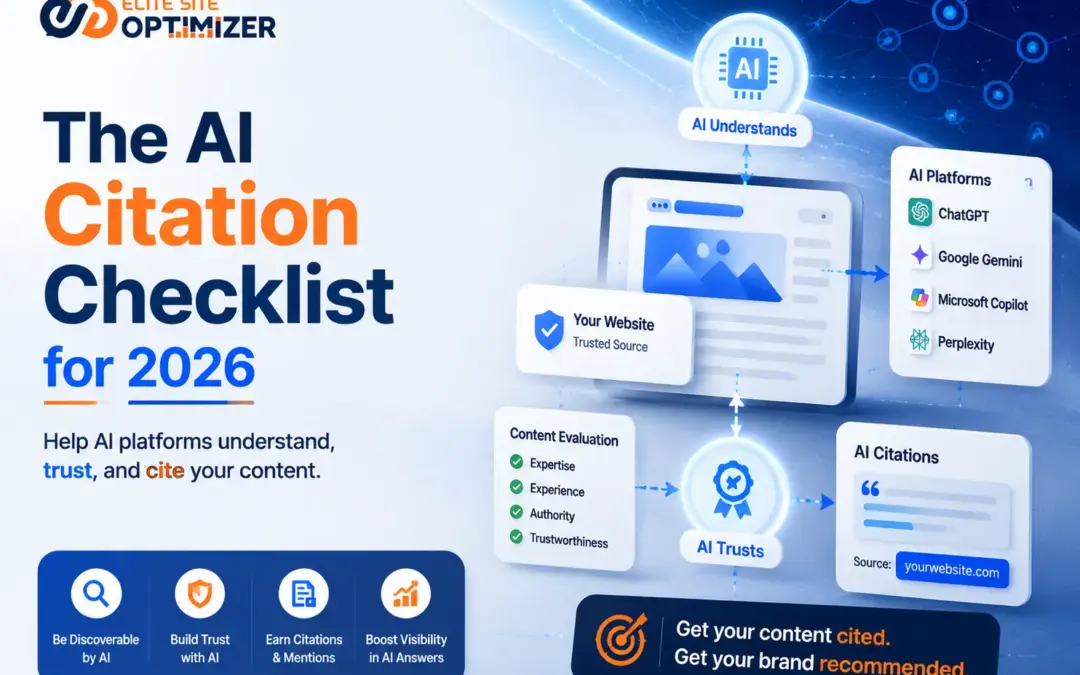
To succeed, businesses must understand how LLMs decide which sources to reference. AI models like GPT, Claude, Gemini, and Perplexity analyze content differently than traditional search engines. Key evaluation signals include:
- Content clarity: Information should be clearly explained.
- Authority & trust: Demonstrate consistent credibility and domain expertise.
- Content structure: Well-organized content with headings, bullet points, and schema helps AI parse and reference your site.
- Topical relevance: Content must address user queries completely and contextually.
- Citation consistency: Multiple reputable references improve chances of being cited.
By aligning your website with these signals, you increase the likelihood of appearing in ChatGPT, Gemini, Perplexity, and Claude without needing to repeat platform names excessively throughout the blog.
The 10-Step AI Citation Checklist
The following checklist will help you implement practical steps to earn AI citations, improve your ai search ranking, and ensure your content is recognized by major AI platforms.
1. Structured Content for AI Parsing
- Use clear headings (H1, H2, H3) and bullet points.
- Include tables, step-by-step lists, and definitions.
- Proper structure helps LLMs understand and reference your website.
2. Create Helpful, Original Content
- Combine clear definitions with unique insights and examples.
- Offer proprietary data, case studies, or original perspectives.
- This improves AI understanding and increases chances of being referenced.
3. Build Trust & Authority Signals
- Include authoritative references and maintain consistent brand/entity information.
- Cross-link to reputable external sources to reinforce credibility.
4. Internal Linking & Topic Clustering
- Connect related pages to form topic clusters.
- Helps AI systems understand your expertise and increases website citations across content.
5. Regularly Updated Content
- Ensure your pages are current and accurate.
- AI platforms favor recent and reliable data for referencing.
6. Use Natural Language & Entity-Based Writing
- Focus on semantic keywords and context rather than repetitive SEO phrases.
- Supports readability for humans and LLM interpretation for AI citations.
7. Schema Markup
- Add FAQ, HowTo, Article, Organization, and Author schema.
- Structured data helps AI identify your content as a referenceable source.
8. Citation Monitoring
- Once your content is optimized, track mentions using the ESO AI Citations Checker.
- Monitor AI references and adjust strategies to maintain consistent ai citations.
9. Content Relevance & Topical Coverage
- Ensure each page addresses a topic comprehensively.
- Combine short-form and long-form content for depth, improving AI recognition.
10. Cross-Platform Entity Consistency
- Maintain consistent business and brand information across all online platforms.
- LLMs rely on entity consistency to decide which websites to cite.
How to Measure AI Citation Success
Monitoring your AI citations ensures your efforts are effective:
- AI mentions across platforms: Count appearances on ChatGPT, Gemini, Perplexity, and Claude.
- AI search ranking: Evaluate how often AI references your website versus competitors.
- Compare AI mentions with traditional SEO metrics: Identify gaps between AI visibility and organic search rankings.
- Consistency across platforms: Ensure your brand and content are interpreted consistently by different LLMs.
These metrics help business owners, SEO professionals, and marketers understand referencing a website from an AI perspective.
Common Pitfalls That Reduce AI Citation
Avoid these mistakes to improve citation probability:
- Thin or shallow content that doesn’t fully answer questions.
- Outdated or inaccurate information.
- Poorly structured pages that LLMs cannot easily parse.
- Lack of unique insights or original examples.
Reducing these issues increases trust and AI recognition.
Benefits of AI Citations
Proper AI citations deliver multiple strategic advantages:
- Enhanced discoverability: AI users find your content even if your Google rank isn’t top.
- Credibility and trust: Being cited by AI platforms boosts your authority.
- Higher engagement: Users coming through AI citations often have higher intent.
- Competitive advantage: Competitors not cited lose visibility in AI-driven search.
- Future-proof AI presence: Builds a foundation for ongoing ai search optimization and inclusion in LLM outputs.
Best Practices for AI-Friendly Content
- Combine traditional SEO with AI citation strategies.
- Structure content for readability and LLM parsing.
- Update content regularly with actionable insights.
- Apply schema markup to make content referenceable.
- Monitor performance using ESO AI Citations Checker and adjust strategies accordingly.
Conclusion
Elite Site Optimizer (ESO) helps businesses monitor AI references and understand where their content appears across AI-driven search experiences. By tracking citation opportunities and identifying content gaps, organizations can build a stronger strategy for becoming a trusted reference source.
In the era of AI-powered discovery, the brands that earn citations will be the ones that consistently provide accurate, valuable, and authoritative information.
Free Trial Awaits
Ready to improve your website’s search performance?
Sign up for Elite Site Optimizer and start analyzing your website’s SEO, accessibility, performance and content quality.
Start Your Free Signup